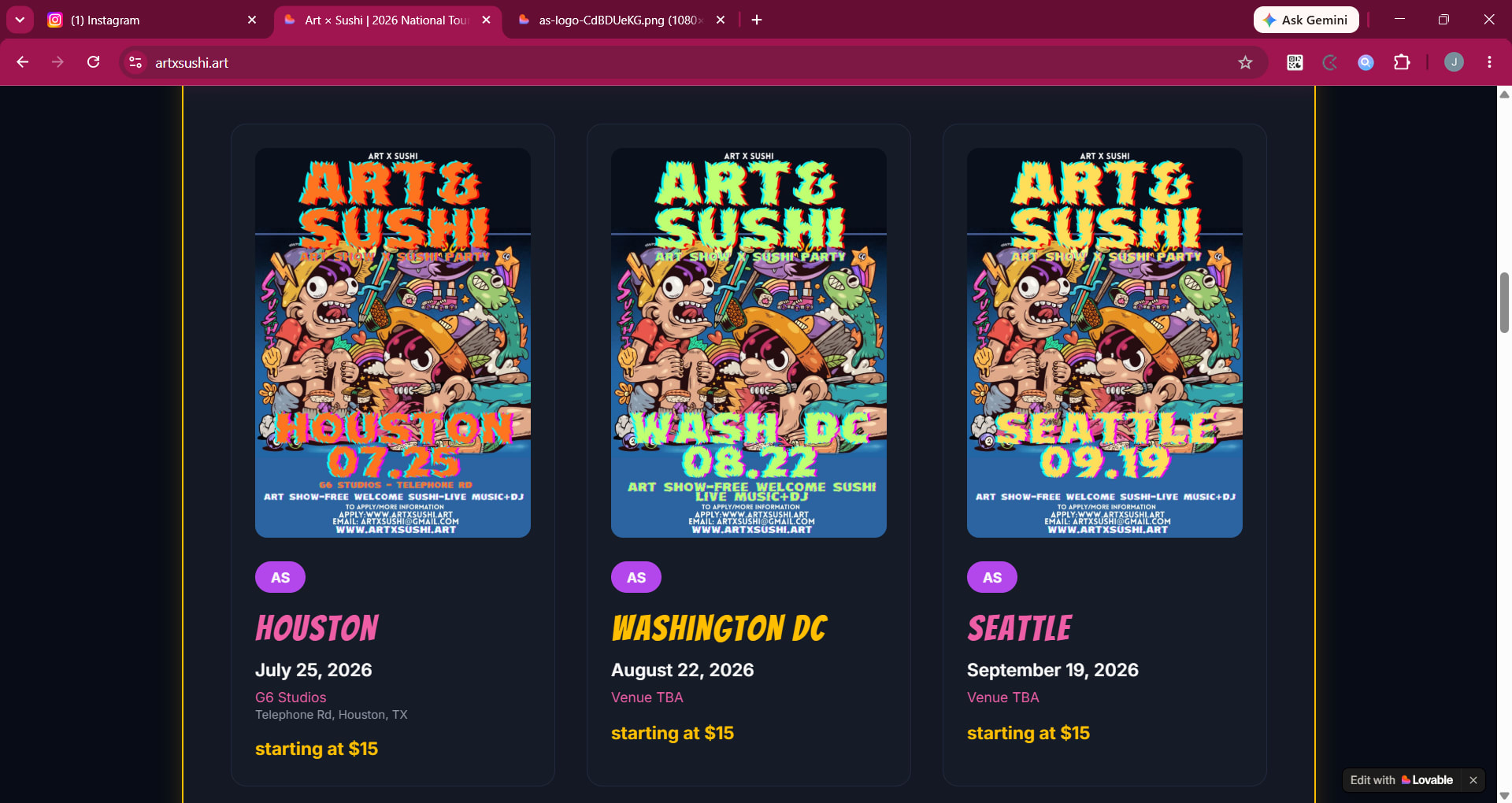
Welcome to James’s first investigative journalism piece! (Okay, not really, but I really felt like I needed to say something about these events.) A little background: a friend took part in one of these events. It was a complete bust. Only 5 walk-ins and the artists “enjoyed” the event. Not even the organizer joined the party. The prices are outrageous enough that I took a much more critical look at this national tour.
Hopefully, I can help someone avoid a scam or show, at the very least, how to be more discriminating in a time when AI-generated content is a given. This will have two parts. The first part is a thorough examination of the event, while the second part will describe, with a few presumptions, how the scam has evolved.
Let’s start with the blatant art theft. The centerpiece of the poster comes from Kittin Klamchuen at https://www.instagram.com/tanpopoe/. He’s a street artist and illustrator from Bangkok, Thailand. He was very sweet and really likes sushi, so I hate that his art was taken maliciously. The videos displayed at the bottom of the page were taken from Sushimura at https://www.instagram.com/sushimura_cusco, a Peruvian restaurant.
If you’re paying attention, you’ll notice that the stolen content is taken from creators outside of the United States. It’s significantly harder for the creators to track. Almost all patrons and vendors won’t know of non-US artists, so they’ll end up assuming the content was made for the events. This acts like a form of social proof. The proof gets even stronger when artists and vendors try to generate buzz through videos that can be co-opted by the organizer. Unfortunately, there’s no easy way to fix this problem.
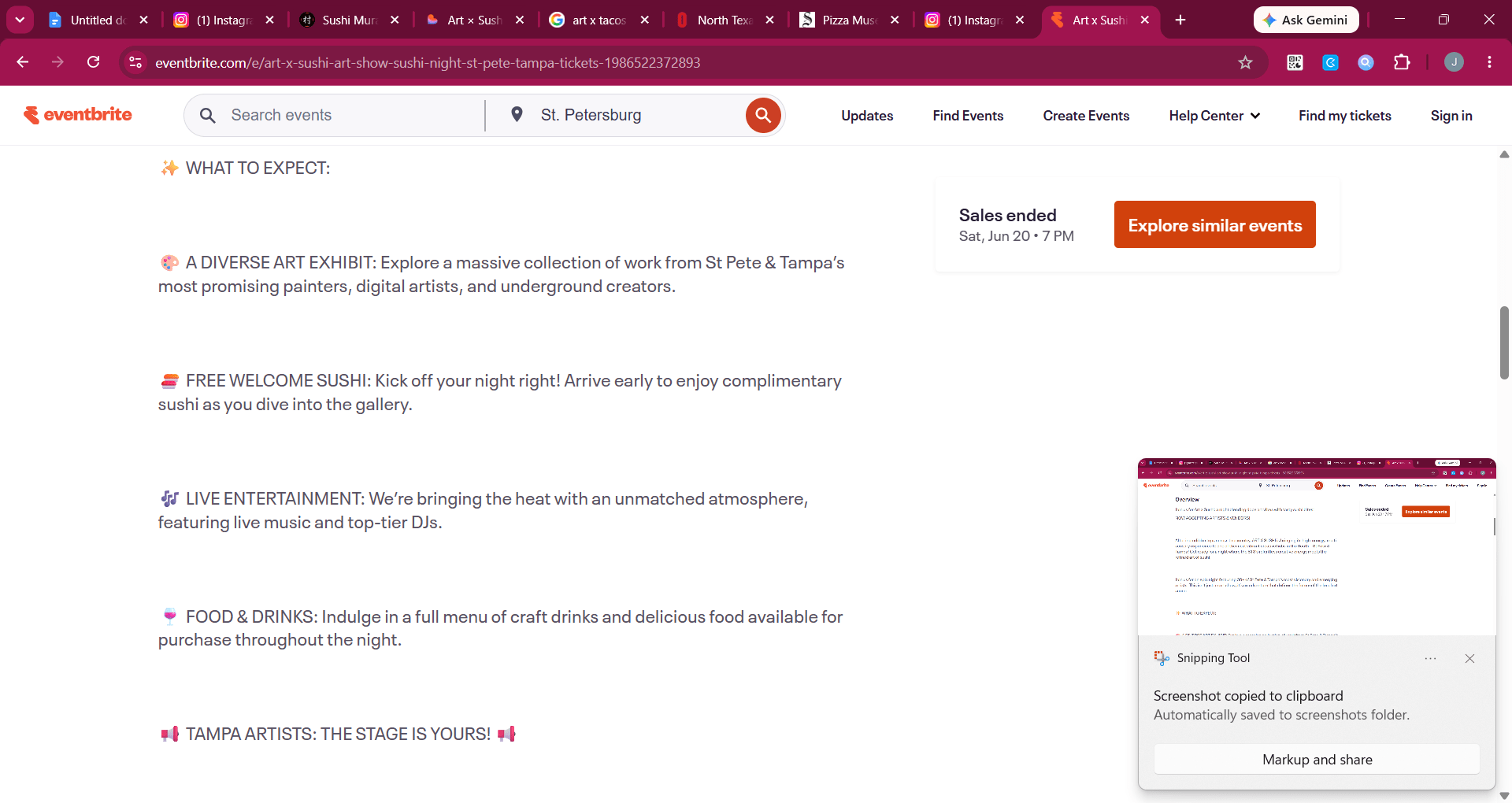
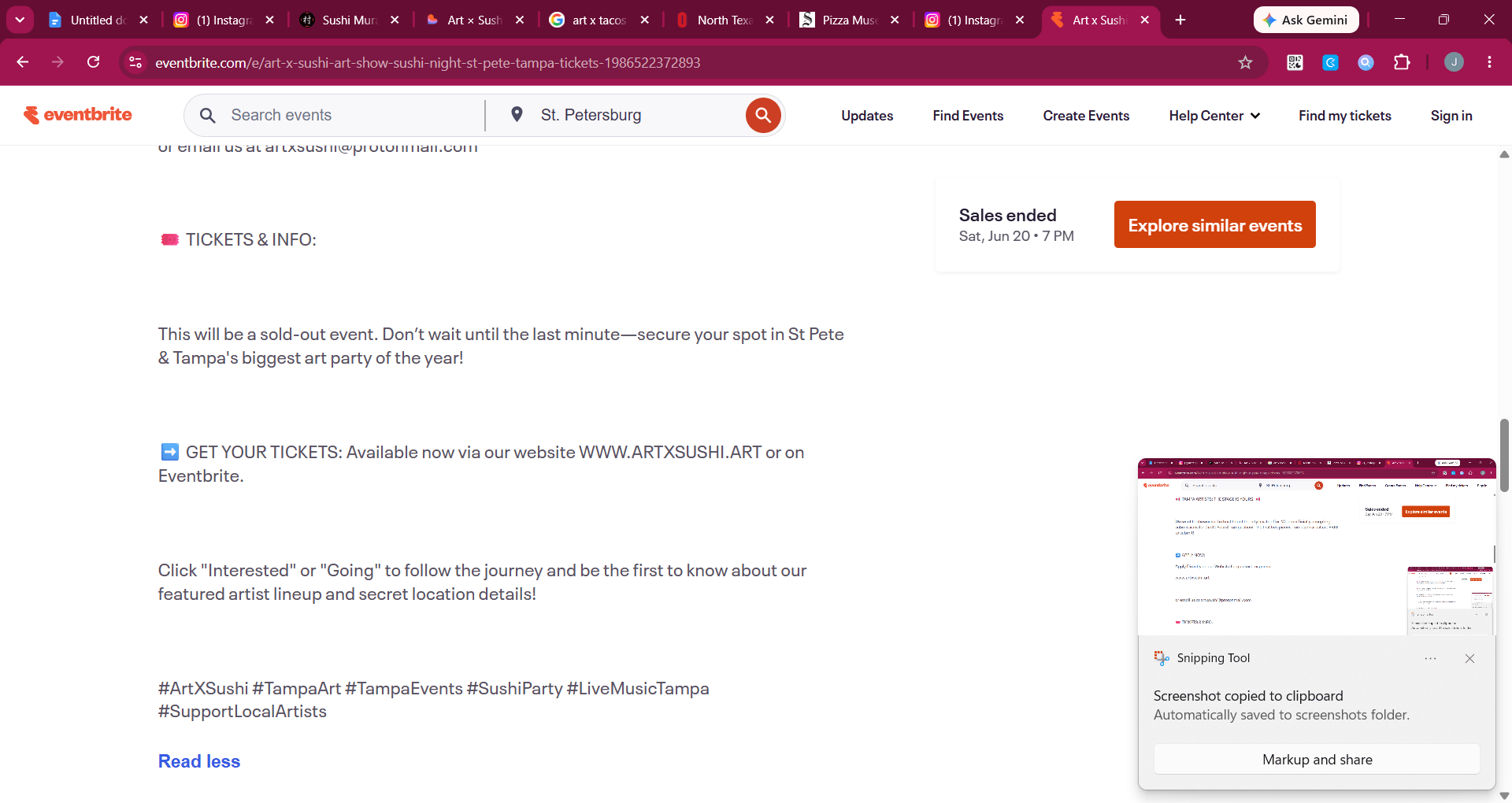
Next, let’s look at how many AI tools were used and how much AI-generated content was provided. The Eventbrite overview absolutely reeks. It uses the classic “not just x; it’s y.” The lists are stereotypical emojis, capitalized words, and relatively vague descriptions. Seriously, why “top-tier DJs” and “full menu of craft drinks” instead of specific DJs and drinks? And, of course, this overview ends with FOMO (fear of missing out): “sold-out event,” “don’t wait until the last minute,” and “be the first to know.” Also, “secret location” is a very convenient way to hide how little effort the organizer gives in finding a venue.
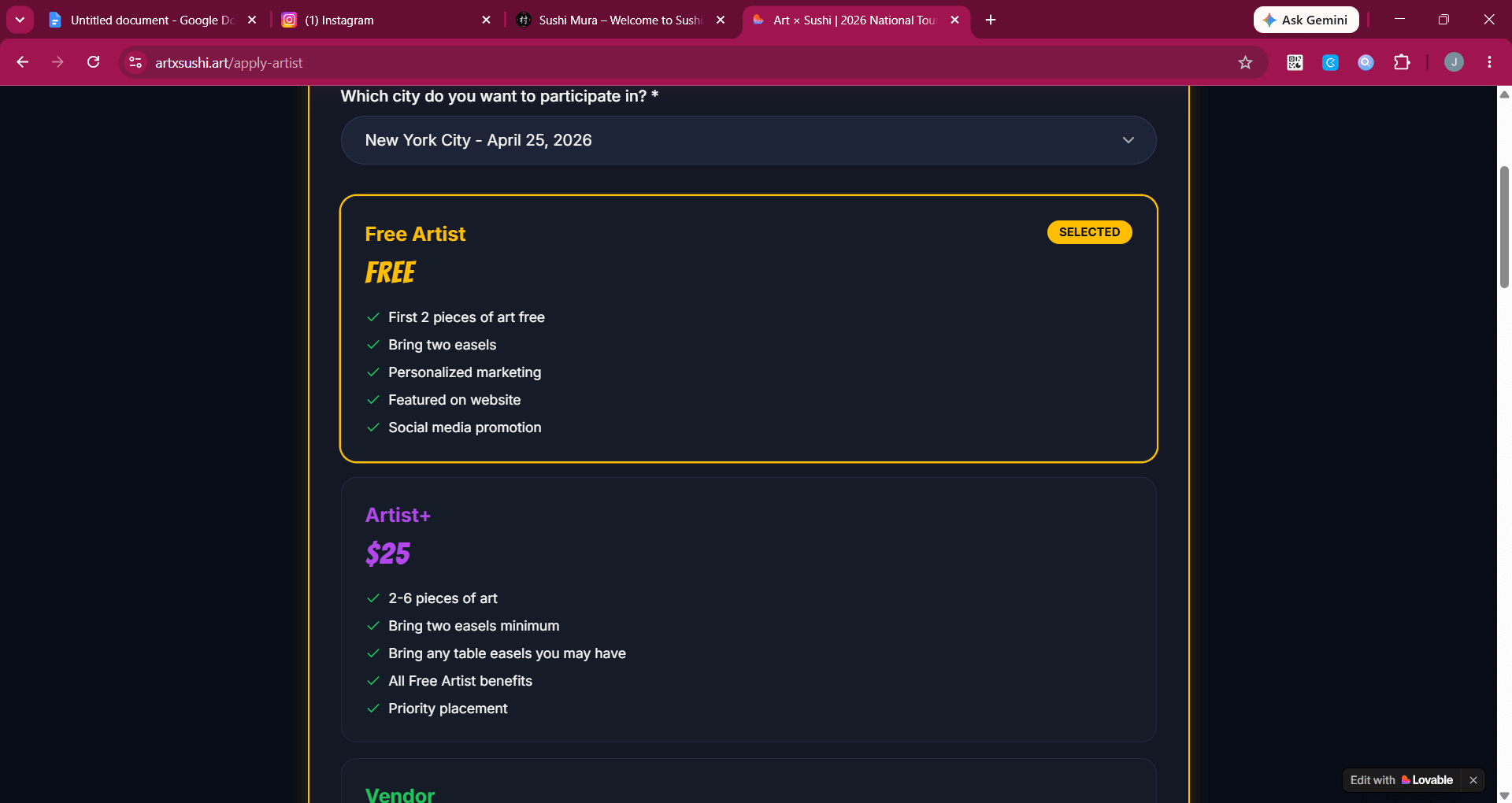
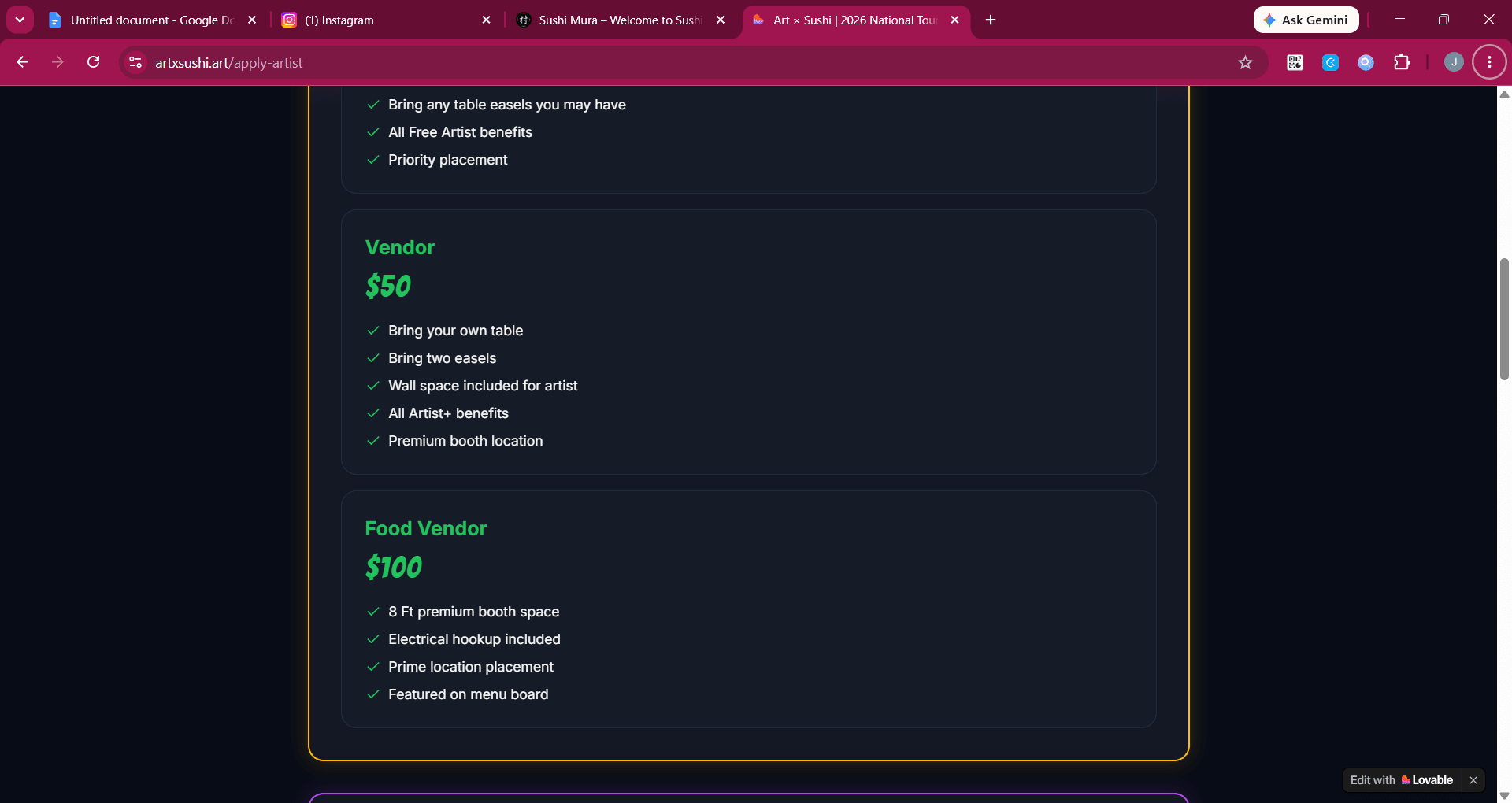
It’s time for the lackluster website. It’s made with Lovable. This isn’t necessarily bad or wrong, but it’s a sign to keep your eyes open. Perhaps that means we should find an About Us page or visit their social media, but it turns out neither exists! The organizer uses artists and their videos from previous events as a form of social proof. Empty sections like “Art x Sushi 2025” are displayed. Once again, be aware of FOMO: ticket “prices increase soon,” “FREE sushi roll,” “exclusive merchandise,” and “early access.” Merchandise isn’t even described anywhere. Artists and vendors are left guessing what priority placement, premium booth location, and prime location placement even mean. The flyers use misleading spacing; most people will read “art show-free” instead of “art show” and “free welcome sushi.”
You might think I’m nitpicking by now. Sure, individually, these aren’t dealbreakers for most people who enjoy events that often use AI-generated content for advertisement. When taken as a whole, though, these events should be avoided or perhaps used with protection, such as credit card chargebacks. I pray you found this somewhat entertaining or learned a little bit, and I might even see you for the next part.